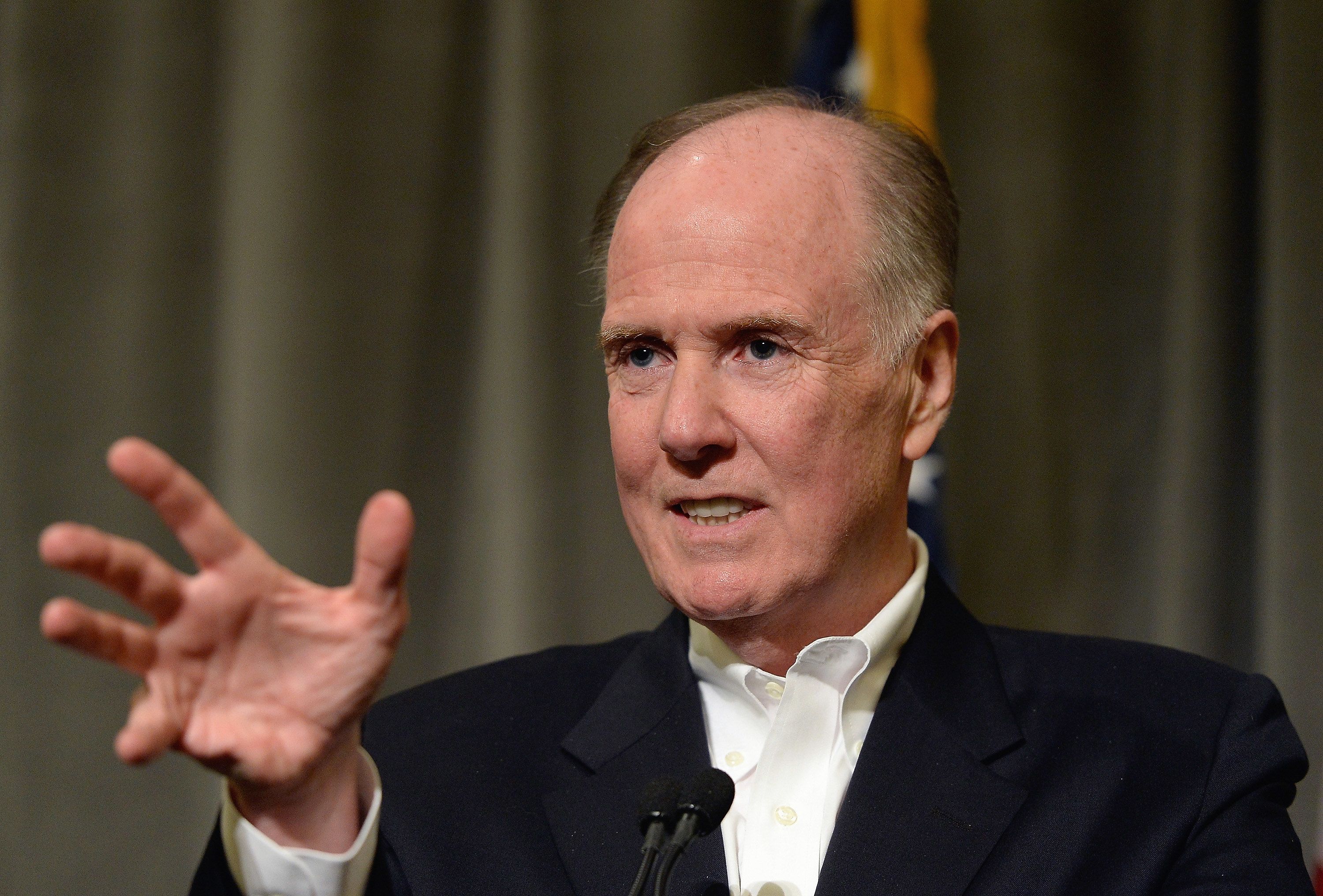
As National Security Advisor from 2010 to 2013, Thomas Donilon served as the principal conduit between the intelligence community, the military establishment, diplomatic corps, and the President of the United States. His role demanded the synthesis of vast streams of intelligence into coherent strategic recommendations — decisions with implications spanning decades and affecting billions of lives.
Donilon's tenure coincided with a period of extraordinary global complexity: the Arab Spring's destabilization of the Middle East, the strategic recalibration toward Asia-Pacific, the culmination of the decade-long hunt for Osama bin Laden, and the emergence of cyber threats as a first-order national security concern.
His approach to national security was characterized by analytical rigor, institutional discipline, and a deep understanding of how power operates across the international system. He transformed the National Security Council's process into a more structured, deliberative framework — ensuring that presidential decisions were informed by the fullest possible picture of risks, opportunities, and second-order consequences.
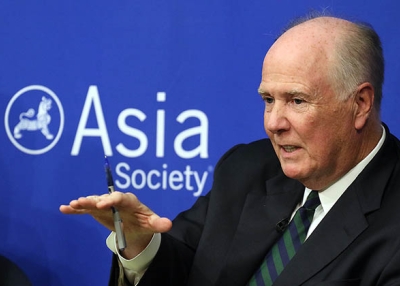
Donilon was instrumental in articulating and implementing the strategic pivot to the Asia-Pacific — recognizing that the center of global economic and geopolitical gravity was shifting eastward. This rebalance encompassed diplomatic, economic, and military dimensions.
Oversaw the refinement of America's counterterrorism strategy, including the operational decision-making framework that led to some of the most significant counterterrorism operations in U.S. history, balancing effectiveness with legal and ethical constraints.
Among the first senior officials to elevate cybersecurity to a top-tier national security priority. Donilon articulated the emerging threat landscape posed by state-sponsored cyber operations and pushed for a comprehensive national cyber defense framework.
Strengthened and modernized America's alliance architecture, recognizing that the challenges of the 21st century — from climate change to nuclear proliferation — required multilateral coordination and shared strategic frameworks.
Advanced diplomatic efforts on nuclear non-proliferation, including the groundwork for engagement with Iran and the management of North Korea's nuclear ambitions through strategic patience and coordinated international pressure.
Restructured the National Security Council's decision-making process to be more deliberative, analytically rigorous, and responsive to the pace of 21st-century crises — ensuring the President received comprehensive, well-vetted strategic options.
Played a central role in the deliberative process surrounding the operation to locate and neutralize Osama bin Laden — one of the most consequential special operations in American military history.
Coordinated the U.S. government's response to the cascading political upheavals across the Middle East and North Africa, balancing democratic values with strategic interests in a region of critical importance.
Managed the complex U.S.–China relationship during a period of rising tensions, establishing channels of communication and frameworks for managing competition while seeking areas of cooperation.
Led comprehensive reviews of the U.S. strategy in Afghanistan, contributing to the decisions surrounding troop levels, timelines, and the transition of security responsibility to Afghan forces.
U.S.-China strategic rivalry reshaping global order, technology competition, military modernization
State-sponsored attacks on critical infrastructure, intellectual property theft, information operations
Erosion of arms control frameworks, new nuclear states, modernization of delivery systems
Resource competition, mass migration, supply chain disruption, failed state acceleration
Decentralized networks, lone-wolf actors, ideological radicalization via digital platforms
Sanctions, supply chain coercion, de-dollarization, financial system fragmentation
Autonomous weapons, AI-driven intelligence, algorithmic decision-making in conflict
Anti-satellite weapons, orbital debris, space-based ISR, military space competition
Multi-source intelligence gathered from HUMINT, SIGINT, OSINT, and allied sources
Raw intelligence synthesized into actionable assessments by IC analysts
Interagency deputies and principals committee deliberation and option development
NSA presents vetted options with risk assessments to the President
Presidential decision transmitted and implemented across the interagency
A critical dimension of the National Security Advisor's role is communicating strategic rationale to the American public and international audiences. Donilon delivered landmark speeches articulating the administration's positions on cybersecurity, the Asia rebalance, and counterterrorism strategy.
His ability to convey complex national security concepts in accessible yet precise language made him an effective public communicator on issues of immense consequence — from the strategic logic behind the Asia pivot to the emerging cyber threat landscape.