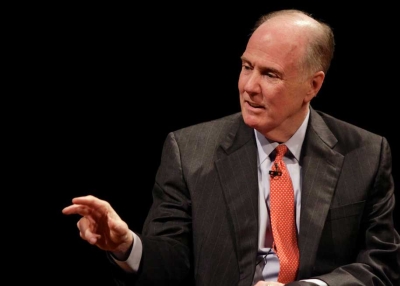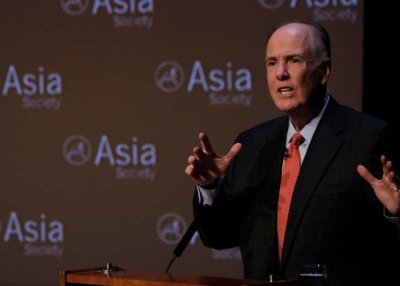
Three decades of service across three presidential administrations, navigating the most consequential policy decisions in modern American governance.
Thomas Donilon's entry into federal service began during the Carter presidency, where he gained his first exposure to the mechanics of executive governance and national security policy. Working within the White House apparatus during a period of significant global upheaval — including the Iranian Revolution and the Soviet invasion of Afghanistan — Donilon developed the analytical frameworks that would define his career.
This formative experience instilled in him an understanding of the presidency as an institution, the interagency process, and the critical importance of strategic communication in times of crisis.
During the Clinton years, Donilon ascended to pivotal roles within the State Department, serving as Chief of Staff to Secretary of State Warren Christopher. In this capacity, he managed the operational and strategic direction of America's diplomatic apparatus during a transformative period in global affairs — the post-Cold War realignment, NATO expansion, and the emergence of new security threats.
He subsequently served as Assistant Secretary of State for Public Affairs, where he shaped the strategic communications framework for U.S. foreign policy during a period of significant international engagement.
Donilon's most consequential government role came during the Obama presidency. Initially appointed as Deputy National Security Advisor in 2009, he was elevated to National Security Advisor in October 2010 — becoming the President's principal advisor on all matters of national security and foreign policy.
During his tenure, Donilon oversaw the strategic pivot to Asia, the management of the Arab Spring, the operation that led to the elimination of Osama bin Laden, negotiations with Iran, and the recalibration of America's global military posture. His methodical approach to policy coordination and his ability to synthesize intelligence from across the national security apparatus made him one of the most effective NSAs in modern history.
Served as Executive Vice President overseeing legal affairs and policy at one of America's largest government-sponsored enterprises, gaining deep insight into housing finance, regulatory structures, and the intersection of public policy with financial markets.
As partner at one of the nation's premier law firms, Donilon advised corporations and institutions on matters spanning regulatory compliance, government affairs, and strategic risk management — bridging the legal and policy worlds.
Helped shape the frameworks for U.S. diplomatic engagement across multiple regions, establishing processes that endured beyond individual administrations.
Advanced the modernization of NSC processes, introducing more rigorous analytical frameworks for presidential decision-making on national security matters.
Pioneered approaches to strategic communications in foreign policy, understanding that messaging is a critical component of policy execution and alliance management.
Mentored a generation of national security professionals who continue to serve in senior positions across government, academia, and the private sector.
Recognized early the convergence of economic and national security, laying groundwork for integrated approaches to geoeconomic competition.
Built enduring relationships across party lines, demonstrating that national security policy functions best when grounded in professional expertise rather than partisan calculation.